Project Overview
Product: Fair Hire AI resume anonymization prototype
Role: Founder & UX Researcher
Method: RITE usability testing
Participants: 12 hiring managers / HR professionals
Outcome: Redesigned workflow and multi-file support
Background
Hiring managers support blind hiring in principle, but existing tools are cumbersome.
We needed to determine whether recruiters could intuitively anonymize resumes using our prototype without training.
Objectives/Research Questions
- Do hiring managers perceive value in an automated anonymization tool?
- Can users successfully complete the anonymization workflow without guidance?
- Where do users encounter confusion or friction in the process?
Approach
Methodology: RITE (Rapid Iterative Testing and Evaluation)
Participants: 12 hiring managers and HR professionals
Session format:
- 5-minute contextual interview
- task-based usability test
- retrospective probing
Tasks
- Upload a resume
- Anonymize the file
- Download the anonymized version
Results (Metrics)
| Task | Success Rate | Observations |
|---|---|---|
| Upload resume | 60% | unclear first step, expected multi-file support |
| Anonymize file | 70% | confusion about workflow, expected to select which data to mask |
| Download file | 85% | minor issues |
Results were captured in a rainbow sheet to detect trends.
Step 1: Upload file(s)
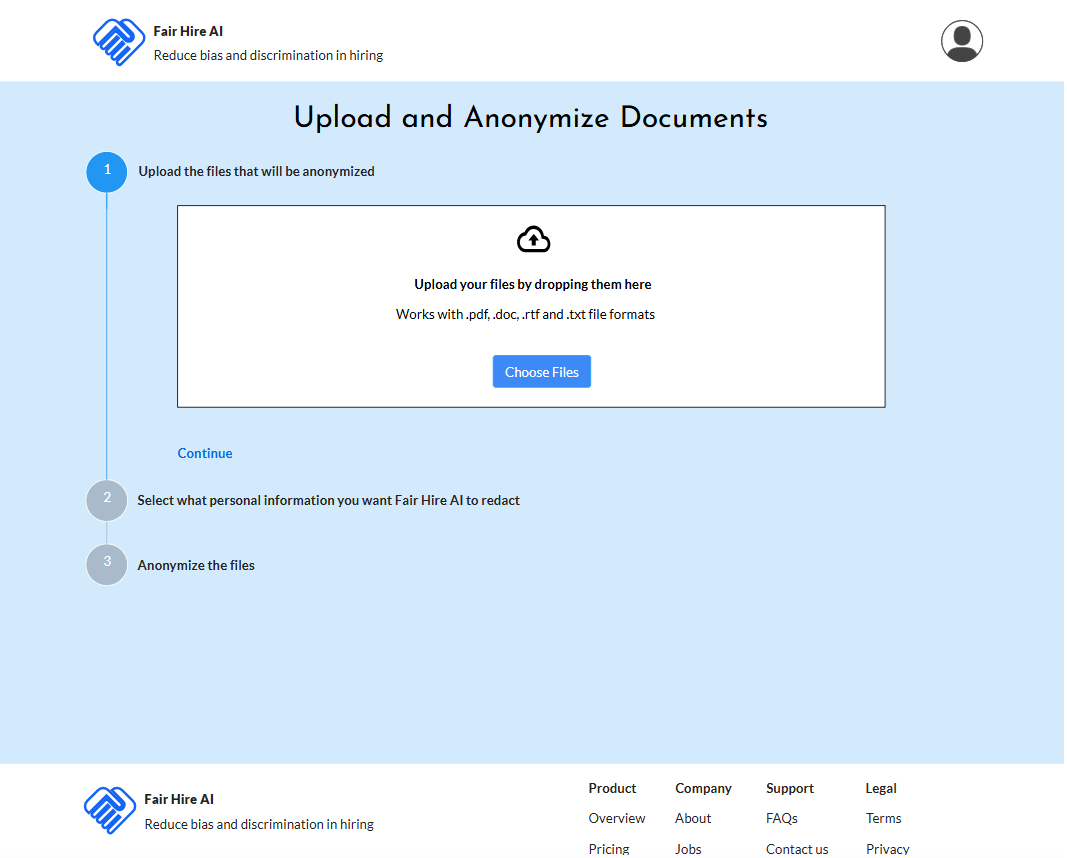
RITE Updates
Design Impact
The RITE sessions led to three major changes:
- Guided 3-step workflow
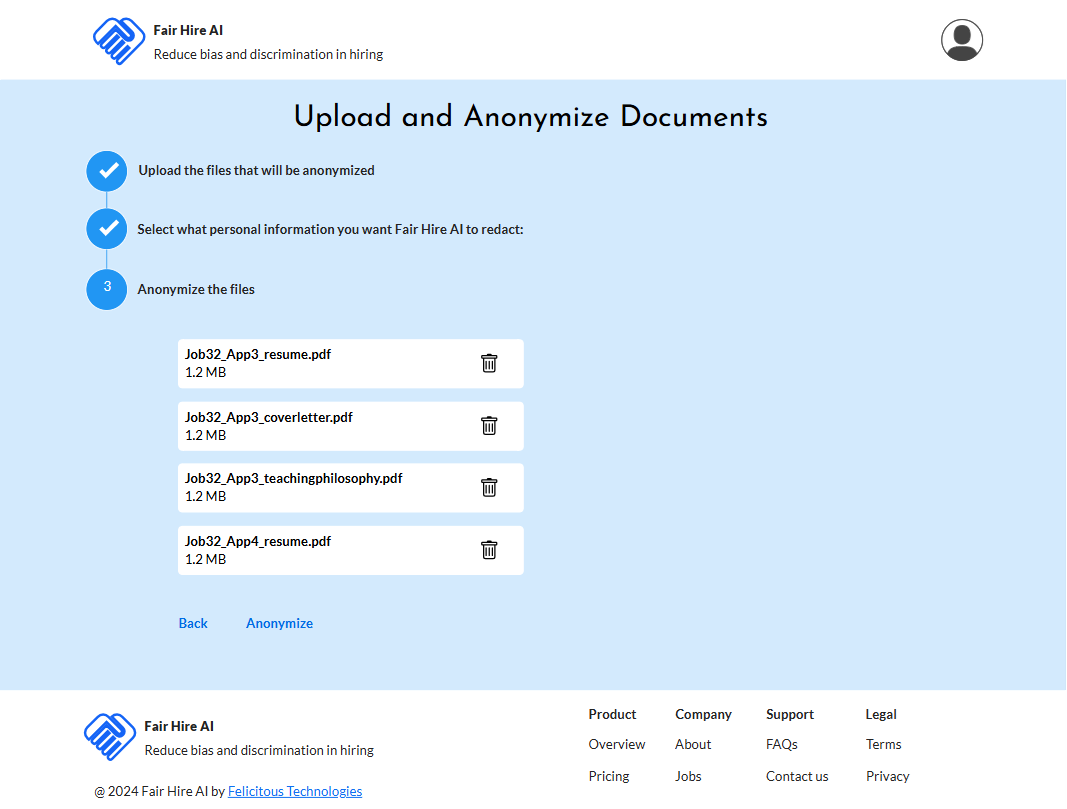
Upload → Select anonymization → Download - Batch processing
Users can upload multiple resumes - Selectable anonymization fields
Users control which data to mask
Step 2: Select information to mask
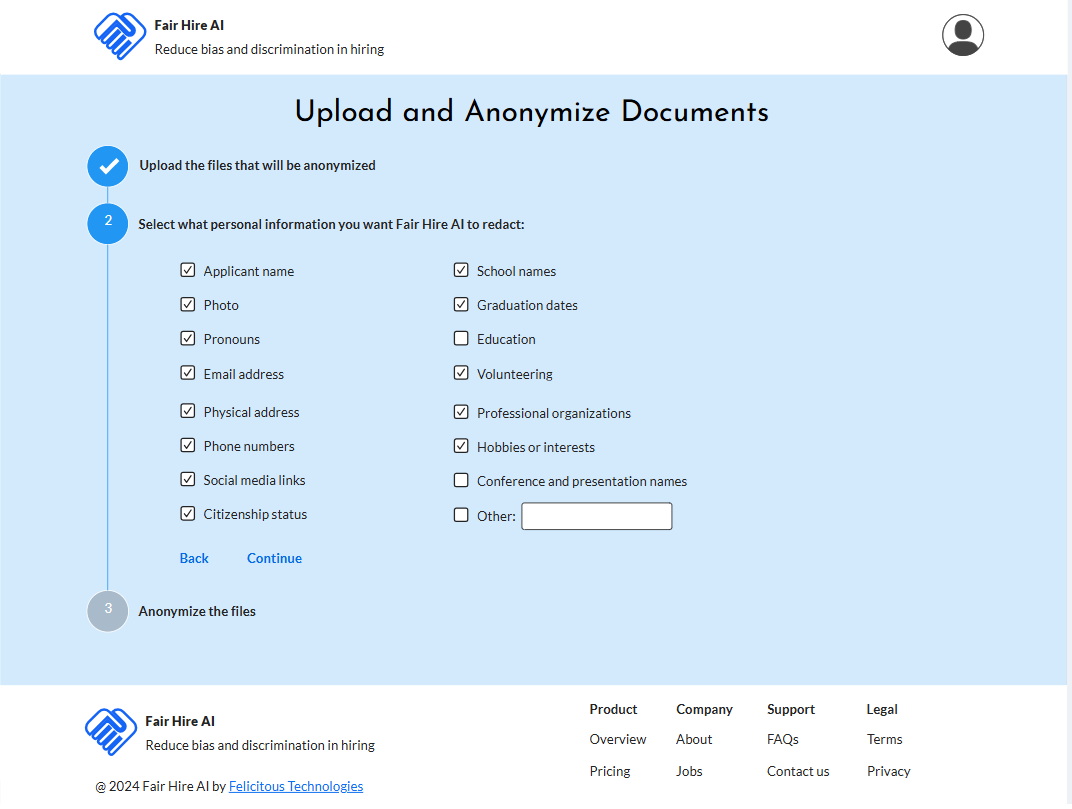
Step 3: Anonymize file(s)
Retrospective
What I Learned
- RITE testing is highly effective for early-stage startup prototypes where UI changes can be implemented quickly.
- Recruiters expect bulk workflows, reflecting real hiring practices.
- Content clarity was as important as interaction design.
Next Steps
- Conduct validation testing on the updated prototype
- Evaluate recruiter trust in automated anonymization